
Program 11-16-5 “Value Deficit”
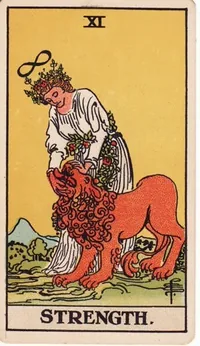
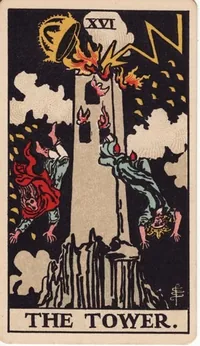
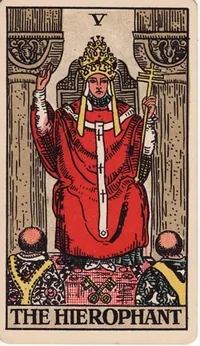
11 “Strength” · 16 “The Tower” · 5 “The Hierophant”
This triplet is most often read as a verdict: if 11, 16, and 5 are in the chart, the person is supposedly doomed to destruction and loneliness. In fact, the 11-16-5 program "Value Deficit" is a devaluation scenario that can be rewritten. It really does show up through Strength, the Tower, and the Hierophant, but not as fate — as a set of habits and reactions. This triplet can sit in different zones of the matrix — the Karmic Tail, the relationship channels, the ancestral lines. The position only determines the sphere where the program speaks loudest; the core — devaluation and barriers to abundance — stays the same.
Is 11-16-5 in Your Matrix?
The widget calculates the triplets across every place in the matrix from your date of birth and highlights where the program “Value Deficit” sits.
What the Three Numbers 11-16-5 Mean
The energy of Strength (11) gives you an inner core and the ability to manage your passions, but in the minus it turns into self-devaluation: you suppress your own desires, considering them unworthy. The Tower (16) destroys what's built on false foundations, and in this program that shows up as sudden breaks: relationships, projects, and plans collapse the moment you start doubting your own worth. The Hierophant (5) governs the value system and authority figures, and here it makes you either blindly obey other people's rules or rebel against any framework at all. Together they create a loop: you don't value yourself, so you let others cross your boundaries, then you explode and destroy the bond, and afterward you become even more convinced that you don't deserve better. The way out is through gratitude and recognizing the value in others.
How “Value Deficit” Shows Up

The 11-16-5 program "Value Deficit" plays out in life as a series, not a one-off episode. You notice yourself dismissing your own achievements: "So what, the project shipped — that was easy." You do the same toward others: you criticize a colleague over a minor mistake, ignore your partner's care because "that's just how it is." Boundary violations are the second marker. You either let others decide for you, because "their opinion matters more," or you invade someone else's space yourself, believing you have the right to. In work and money, it sounds like this: you underprice your services, take on other people's tasks because "it's awkward to say no," and then get angry that your income isn't growing. In relationships, you might choose partners who don't appreciate you properly, or you fail to notice their contribution yourself — until the "Tower" hits: a sudden break. After that you fall into self-blame: "So I really am nobody." The cycle repeats until you change your relationship to worth — your own and other people's.
Program 11-16-5 in 12 places in the matrix
The key principle: the 11-16-5 triplet always carries the same core — a deficit of worth — but it shows up at different volumes. In the Karmic Tail, it's a repeating scenario from the past that follows you from incarnation to incarnation. In the Money Line, it hits your income: you get less than you should because you can't ask or receive. In the relationship channel, it's about partner choice and the "devaluation — explosion" dynamic. In the ancestral lines, it's an inherited scenario, where the family didn't praise but did criticize. Below is a breakdown for every position in the matrix where this program can sit. You'll see how the same energy changes the sphere but not the core.
As a child, your achievements were dismissed by your parents, so you learned not to believe in your own worth. Now you dismiss the people close to you the same way.
Start noticing and praising yourself for small steps.
Your talent is seeing potential in others, but you don't see it in yourself. You can inspire people while staying in the shadows yourself.
Turn your gift on yourself: find three of your own strong qualities.
Money leaks away because you undervalue your own work. You set low prices or work for free, afraid of looking greedy.
Raise your price by 30% — your skill is worth more.
The repeating lesson is that you end up in situations where you're not valued, and you devalue others in turn. The circle closes.
Break the cycle: start voicing gratitude out loud.
The balance of money and love suffers because you don't feel worthy of either one. You live in scarcity.
Every day, write down one reason to thank yourself.
In relationships, you cross personal boundaries or let yours be crossed. You feel you don't deserve a worthy partner.
Make a list of what you give your partner, and acknowledge it.
You don't trust your intuition, thinking it's not valuable enough. You constantly double-check yourself against other people.
Write down your hunches and check them after the fact.
Your father passed down a dismissal of spiritual searching and ideals.
Value your own beliefs and respect other people's.
The paternal line carries a deficit of money and boundary violations around property.
Set clear financial rules.
Your mother taught you to dismiss your own feelings and intuition.
Recognize the value of your own emotions.
The maternal line passed down a deficit of care and everyday instability.
Create comfort and order in your home.
This period teaches you to see the value in yourself and the people around you. By acknowledging other people's worth, you open access to real abundance.
Thank yourself and others every day for specific actions — that's your key to growth.
How to Work Through Program 11-16-5

Checkable action 1: for three weeks, write down three things you're grateful to yourself for every day — specific ones, like "made dinner on time" or "didn't snap at a colleague." This works as worth training: you learn to notice your own value without dismissing it. A sign of progress: you stop waving off your achievements with "it's nothing."
Checkable action 2: once a week, run a "compliment experiment" — tell someone close to you what you value in them, with no occasion needed. This breaks the mechanism of devaluing others. A sign: the person becomes more open to connecting, and you feel less irritation toward them.
Checkable action 3: set a "boundary of the day" rule. Every day, decide on one "no" you'll say if something goes against your plans. This gives you back the right to boundaries. A sign: you start feeling that the world doesn't fall apart when you say no.
Program 11-16-5 at Its Worst and Its Best
The same energy sounds different depending on whether the program has been worked through.
| Area | − Unworked | + Worked Through |
|---|---|---|
| Money and Income | You underprice your services, you're afraid to ask for a raise, you spend more on other people's needs than your own — your income stays consistently below what's possible. | You price your work fairly, ask for decent pay, and spend on yourself without guilt — money comes more easily and sticks around. |
| Relationships with a Partner | You choose people who don't value you, or you ignore your partner's contribution yourself, until the tension leads to a breakup. | You build relationships with people who recognize your worth, and you notice your partner's contribution yourself — the bond becomes more stable and warmer. |
| Self-Worth | You constantly compare yourself to others unfavorably, dismiss your successes, and blow your failures up into a catastrophe. | You acknowledge your strengths, take mistakes in stride, and feel you deserve respect and love. |
| Work and Career | You take on other people's tasks, don't speak up about your own achievements, let colleagues take credit for your work — and burn out. | You clearly mark out your area of responsibility, present your results, and don't let people take advantage of you — your career moves up. |
| Family and Lineage | You repeat your parents' "criticism instead of praise" scenario, feeling unappreciated yourself while not giving recognition to others. | You break the chain: you praise the people close to you, recognize their worth, and accept your own — the family gains more warmth. |
| Body and Resource | You don't take care of your body: you skip meals, sleep too little, ignore fatigue, telling yourself you "haven't earned" a rest. | You respect your body's needs, give yourself rest and healthy food, and feel a surge of energy with less fatigue. |
11-16-5 in Compatibility

In a couple's chart, the 11-16-5 program is most often projected outward: you devalue your partner, and they devalue you, creating a closed loop. At first, infatuation papers over the cracks, but once daily life takes over, the nitpicking and blowups begin. If the partner has similar energies, the conflicts intensify. You can check how the triplet affects the union in the Compatibility Calculator — it shows which zones of the partners' charts overlap. If the program sits in the relationship channel, without any work it will keep weighing on the couple, but with practices of gratitude and recognizing worth, the relationship can hold.
A full calculation shows all 32 positions of the matrix and highlights whether triplet 11-16-5 is personally yours, and in which of the 12 places — and what to do about it.
Calculate My Matrix →Frequently Asked Questions

How 11-16-5 Differs From Similar Programs
Three combinations most often confused with this program, and the tell that shows which one is actually yours.
Programs Sharing Energies

Roman Mullet
I approach numerology as a symbolic system, not a predictive practice. The program “Value Deficit” describes a recurring scenario, not a sentence: triplet 11-16-5 has a positive side that opens up once it's worked through.
The texts for each place in the matrix on this page are the same ones the calculator shows in the paid report — one shared nomenclature, nothing tailored just for this page.
About the Author