
Program 5-15-10 “The Outcast Unifier”
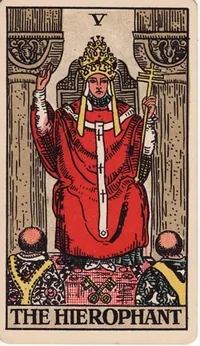
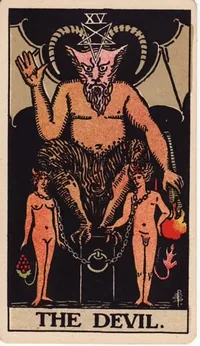
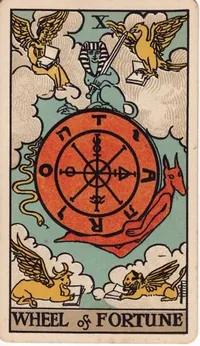
5 “The Hierophant” · 15 “The Devil” · 10 “Wheel of Fortune”
You walk into a gathering where everyone already knows each other, and you stand off to the side feeling out of place. Ten minutes in, you already know how to improve their project, but you stay quiet, certain no one will get it. That's the 5-15-10 program, the Outcast Unifier: 5 the Hierophant, 15 the Devil, and 10 the Wheel of Fortune. It describes a repeating storyline where you clash with established systems and feel like an outcast, while the same set of energies gives you the charisma and systems thinking to unite people around large-scale projects. This triad isn't tied to one spot in the chart — you can find it in the Karmic Tail, in the Money Line, in the ancestral lines, and in nine other positions. The position decides which area of life takes the hit, but the storyline itself — conflict, pride, isolation, and a way out through unity — stays the same.
Is 5-15-10 in Your Matrix?
The widget calculates the triplets across every place in the matrix from your date of birth and highlights where the program “The Outcast Unifier” sits.
What the Three Numbers 5-15-10 Mean
The 5, the Hierophant, stands for structures, rules, teachers, and systems. You feel obligated to follow them, but you resist inwardly. The 15, the Devil, adds a twist: instead of honestly accepting the rules or openly challenging them, pride kicks in — you decide you're smarter than the system and pull away. The 10, the Wheel of Fortune, closes the loop — it gives you the sense that none of this is random, that 'they' are always against you, which locks in the outcast role. In the end you crave recognition, yet you push away the very people who could become your allies. The energy of this triad loops on itself: conflict → isolation → even more conflict. The breakthrough comes when you realize the system isn't an enemy but a tool, and that your charisma can bring people together instead of dividing them.
How “The Outcast Unifier” Shows Up

At work and with money, the 5-15-10 program plays out as a repeating scenario where you end up clashing with management, your team, or industry rules. You spot inefficiency and propose fixes, but you do it defiantly, with contempt for anyone who 'doesn't get it.' The result: no one listens, you quit, or you get pushed out. Money arrives in bursts — a breakthrough, then a long dry spell — because you never build stable channels, relying on luck instead. Relationships suffer differently: you wait for a partner or family to admit you were right, but you won't compromise yourself. You can hold a grudge against parents or former coworkers for years, convinced they undervalued you. Among friends, you're often part of the group but feel apart from it, because you won't let yourself be vulnerable. In the body, this program shows up as tension in the neck and shoulders — as if you're permanently braced for a fight. You may notice you keep attracting situations where you're not accepted, but that's no accident: you create them yourself, sparking conflict where you could have found agreement.
Program 5-15-10 in 12 places in the matrix
Next I'll break down how the 5-15-10 program behaves in different spots on the chart. The principle is this: the triad of energies stays the same, but its sphere and volume shift depending on the position. In the Karmic Tail, it's a repeating scenario from the past that you carry from lifetime to lifetime — it shows up as an 'eternal' outcast role. In the Money Line, the same storyline plays out around income: conflicts with employers or clients, unstable earnings. In the ancestral lines, the program is passed down as an inheritance — say, a grandfather clashed with his bosses, a father with authority, and you repeat the same path. In other positions — the partnership channel, Talent Zone, purpose — the emphasis shifts, but the core stays the same: pride, isolation, and a chance at unity. Below are full breakdowns for each of the twelve positions.
As a child you were the black sheep of the family. You weren't understood, and you rebelled against the rules.
Accept your difference — it gives you the strength to lead others.
Your gift is uniting scattered people. You see a common goal where others see chaos.
Build communities around an idea, not around yourself.
Money comes through unconventional setups. You can't stand routine work, but you clash with management.
Build your own project where you set the rules.
A pattern from the past: the outcast in groups. You provoke conflicts yourself so you can be the first to leave.
Stay in the group and resolve the conflict peacefully — that's a new experience for you.
You're torn between money and love: either a lonely career or a family with no money.
Look for a like-minded partner for a shared venture.
In a couple you're the rebel: one moment idealizing your partner, the next devaluing them. Isolation gives way to intense closeness.
Learn steady warmth instead of the highs and lows.
You pick up on the weak spots in systems and people. But you often use it as a weapon instead of to help.
Direct your insight toward building things, not toward criticism.
From your father — the outsider in spiritual matters, a rejection of tradition.
Build your own value system — it will bring others together.
Through the paternal line — conflict with authority and money.
Use your charisma for negotiation, not for fighting.
From your mother — isolation through pride in intuitive matters.
Share your knowledge — it will restore your connection to the family line.
In everyday life — unity achieved by overcoming your mother's outsider status.
Build a community around your home — that's your resource.
The period unfolds through uniting scattered groups. Your uniqueness is seeing connections where others see chaos.
Bet on building a community around a shared idea — it will amplify your influence.
How to Work Through Program 5-15-10

First step: start tracking your thoughts during conflict. When you feel undervalued, ask yourself: 'Do I want to be right, or do I want to belong?' This isn't an abstract question — it's a practice. In your next argument at work, try not proving your point but asking your opponent two clarifying questions instead. If you can pull that off, the energy starts moving out of the minus. Second step: start a project where you bring people together instead of standing against them. It doesn't have to be global — you could organize a meeting with coworkers to discuss a problem, or gather friends for a shared cause. The key is taking on the role of connector, not critic. Third: pick one system you've had a long-running conflict with (house rules, corporate norms, whatever), and write down what it gave you and what it took from you. This helps you see it as part of a structure rather than an enemy. A sign the program has flipped to plus: you start enjoying it not because 'I outplayed everyone,' but because the team or family is working as one.
Program 5-15-10 at Its Worst and Its Best
The same energy sounds different depending on whether the program has been worked through.
| Area | − Unworked | + Worked Through |
|---|---|---|
| Money and Income | You clash with management or clients, which costs you contracts and steady income — money arrives in fits and starts. | You use systems thinking to find unconventional solutions for projects, and you earn by bringing other people together. |
| Relationships | You keep your distance even from people close to you, waiting to be acknowledged but never meeting them halfway, so your partner feels the coldness. | You take the first step toward making up, you acknowledge other people's contributions, and the relationship grows deeper and warmer. |
| Self-Esteem | You think you're smarter than everyone else, but secretly doubt your own worth, which pushes you into conflict. | You find your worth not in being superior but in your ability to bring people together, and that makes you feel more confident. |
| Work and Career | You keep clashing with the rules or the team, which often gets you fired or demoted. | You become the one who builds bridges between departments or people, and you get promoted for it. |
| Family and Ancestry | You repeat the family pattern of clashing with authority, and it distances you from your father or mother. | You're the first to take a step toward reconciling with family, and through it you heal old pain. |
| Body and Resource | You tense your shoulders and neck from constantly bracing for an argument, which leads to chronic tension and fatigue. | You relax around other people, your body stops feeling under siege, and your energy comes back. |
5-15-10 in Compatibility

In a couple's chart, the 5-15-10 program plays out through the interaction of energies: if one partner has this triad in the Karmic Tail and the other in the Money Line, the storylines will cross. One partner might keep provoking conflict with the system while the other takes the financial hit. In the relationship, it matters that both people recognize their own programs and don't cling to the outcast role. If one has already worked through the path to unity, they can pull the other one out. Use the Compatibility Calculator to see where your programs overlap and find your growth points.
A full calculation shows all 32 positions of the matrix and highlights whether triplet 5-15-10 is personally yours, and in which of the 12 places — and what to do about it.
Calculate My Matrix →Frequently Asked Questions

How 5-15-10 Differs From Similar Programs
Three combinations most often confused with this program, and the tell that shows which one is actually yours.
Programs Sharing Energies

Roman Mullet
I approach numerology as a symbolic system, not a predictive practice. The program “The Outcast Unifier” describes a recurring scenario, not a sentence: triplet 5-15-10 has a positive side that opens up once it's worked through.
The texts for each place in the matrix on this page are the same ones the calculator shows in the paid report — one shared nomenclature, nothing tailored just for this page.
About the Author