
Program 16-6-8 “Promises Without Weight”
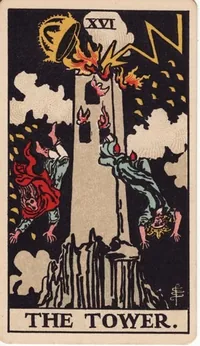
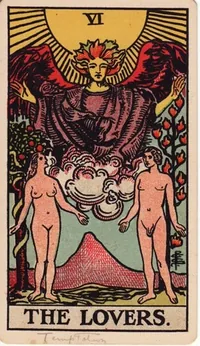
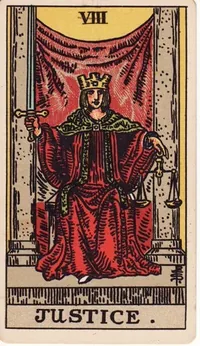
16 “The Tower” · 6 “The Lovers” · 8 “Justice”
Have you ever caught yourself promising more than you can deliver, then scrambling to find a way out of it? The 16-6-8 program, Promises Without Weight, is a combination of the Tower, the Lovers, and Justice, and it makes you trade trust for the appearance of it. It doesn't only show up in the Karmic Tail: this triad appears in different zones of the chart — from the money channel to the ancestral lines. The placement only decides where the program triggers; its core stays fixed: you're weighing your words not on the scale of honesty, but on the scale of other people's approval.
Is 16-6-8 in Your Matrix?
The widget calculates the triplets across every place in the matrix from your date of birth and highlights where the program “Promises Without Weight” sits.
What the Three Numbers 16-6-8 Mean
The 16 energy, the Tower, is a sudden collapse that you yourself set in motion. 6, the Lovers, is a choice made not from the heart, but from a wish to be liked. 8, Justice, is the reckoning for the wrong choice. Together they form a cycle: you make a promise to hold someone's attention (six), then reality falls apart because you didn't have the strength to follow through (the Tower), and the reckoning comes — you lose trust, and your standing along with it (eight). Eight here isn't a punisher — it's a scale: it shows that your words and your actions are out of balance. You're the one weighing your own capacity wrong.
How “Promises Without Weight” Shows Up

This program shows up in patterns, not isolated slip-ups. Say you promise to deliver a project in a week, when realistically it needs two. Saying 'later' feels like showing weakness. You take on more than you can carry, and when the deadline hits, you either miss it or hand in something half-finished. Coworkers stop counting on you. Or in a relationship: you promise your partner a weekend together, then cancel at the last minute because you took on overtime again. The person close to you feels devalued. And it snowballs: to make up for what you didn't deliver, you promise even more, and the cycle repeats. Over time, you start deceiving yourself too: you plan more than you can realistically handle, because you don't want to admit your limits. At work, money suffers — you lose bonuses and reputation. In relationships, trust suffers — your partner gets tired of empty words, and sincerity gives way to formality. And through it all, you feel empty, because the recognition you earn through promises isn't backed by anything real.
Program 16-6-8 in 12 places in the matrix
This triad works the same way everywhere, but how loud it gets depends on which zone of the chart it sits in. In the Karmic Tail, the program is a recurring scenario from the past that you carry with you: it feels like you won't be noticed without making promises. In the Money Channel, it hits your income: you promise a client something you can't deliver, and you lose the order. In the ancestral lines, it's an inherited habit of 'putting on a show' for others, passed down from your elders. Below is the breakdown for every placement — check exactly where this combination sits for you, and work on that specific area.
Your parents often made promises and didn't keep them — you either copy that, or suffer from distrust. With your own children, it matters to keep your word, or you lose your authority.
Don't promise what you're not sure of. Better to say no right away.
Your talent is inspiring people with words, painting a bright picture of the future. But if the words aren't backed by action, the talent turns into manipulation.
Back every promise with a concrete plan of action.
You promise clients or partners more than you can deliver, chasing quick gain. Your reputation collapses from broken commitments.
Write realistic contracts and build in a time buffer.
A past pattern — promising and not delivering, just to look better. This cycle eventually means people stop believing you too.
Start with one commitment a week and follow through on it perfectly.
You promise your partner the world, but in reality can't even provide stability. The imbalance between words and actions wrecks both money and love.
Do it first, then talk about the results.
In love, you say beautiful words with no action behind them. Your partner stops believing you. Words without deeds lead to loneliness.
Give small surprises for no reason — they speak louder than promises.
You often mistake wishful thinking for reality — your intuition gets replaced by fantasy. This leads to bad decisions.
Check your hunches against the facts before you act.
Your father often promised more than he could deliver, passing down the habit of looking good at any cost.
Assess your capacity honestly — your word gains weight once your actions match your promises.
On the male line comes an emptiness left by unmet commitments, which erodes trust in business.
Do less, but do it well — this restores weight to your word.
Your mother passed down a feeling of emptiness from broken promises, which is why you're afraid to disappoint people.
Be honest about what you're capable of — this eases the inner tension.
On the female line comes an inflation of expectations, which means promises never get backed by action.
Close the gap between word and deed — this strengthens trust within the family.
This period gives you the ability to keep your word and build solid connections. Your honesty and reliability attract the right people and unlock karmic opportunities.
Bet on quality over quantity. Follow through on your promises and choose people who share your values — it will bring stable results.
How to Work Through Program 16-6-8

First step: learn to pause before answering. When someone asks you for something, or you're about to offer something yourself, make it a rule to say 'I'll get back to you with an exact answer in an hour.' In that hour, estimate how much time and effort you'll really need, and multiply it by 1.5 — that's your honest deadline. This is a checkable action that breaks the automatic urge to promise.
Second step: track your promises once a week. Set up a three-column table: what you promised, to whom, and whether you delivered on time. After a month you'll spot a pattern: how many promises you make in total, and how many of them fail. It usually turns out that out of ten promises, you keep seven, and the three you break are the ones made 'on autopilot.'
Third step: stop using promises as a way to boost your own worth. Instead of 'I'll do it better than anyone,' say 'I can do it well, but it'll take time.' Start noticing that people value an honest assessment more than bragging.
A sign the energy is shifting positive: you say less, but every word you say carries weight. People start coming to you for your expert opinion, because they know: if you said you'll do it, you will.
Program 16-6-8 at Its Worst and Its Best
The same energy sounds different depending on whether the program has been worked through.
| Area | − Unworked | + Worked Through |
|---|---|---|
| Money | You promise clients results you can't guarantee, and as a result lose large sums and damage your reputation. | You honestly assess your capacity, only take on work you can handle, and earn more thanks to a stable, steady flow. |
| Relationships | You cancel plans and break promises, and your partner stops trusting your word — the relationship turns formal. | You tell your partner the truth about your plans ahead of time, and they know your word is a guarantee, not empty noise. |
| Self-Esteem | You set yourself impossible goals to prove your worth, then blame yourself when you fail. | You set realistic goals, achieve them, and feel a confidence that doesn't depend on other people's opinions. |
| Working with People | You agree to help everyone without accounting for your own capacity, end up missing deadlines, and let the team down. | You're honest about when you can help and when you can't, and coworkers always know you keep your word. |
| Family and Ancestry | You promise family you'll visit or help often, but always find a reason not to, building up resentment over time. | You only promise family what you can actually deliver, and they know your help is reliable. |
| Body and Resource | You pile so many tasks on yourself that your body can't keep up, leading to chronic fatigue and insomnia. | You distribute your workload, factor in recovery time, feel a surge of energy, and get more done through quality rather than volume. |
16-6-8 in Compatibility

In a couple's combined chart, this triad in one partner shows up as 'verbal down payments': the person promises shared plans but doesn't deliver, which undermines trust. If both partners have the program, mutual resentment builds and endless arguments break out over who owes whom. If only one has it, the other feels deceived. The program gets worked through via an honest conversation about real capacity — not 'what do you want to hear,' but 'what can I actually offer.' You can check how this triad's energies combine with your partner's personal arcana using the Compatibility Calculator on the Numefy site — it shows where you support each other and where old scenarios kick in.
A full calculation shows all 32 positions of the matrix and highlights whether triplet 16-6-8 is personally yours, and in which of the 12 places — and what to do about it.
Calculate My Matrix →Frequently Asked Questions

How 16-6-8 Differs From Similar Programs
Three combinations most often confused with this program, and the tell that shows which one is actually yours.
Programs Sharing Energies

Roman Mullet
I approach numerology as a symbolic system, not a predictive practice. The program “Promises Without Weight” describes a recurring scenario, not a sentence: triplet 16-6-8 has a positive side that opens up once it's worked through.
The texts for each place in the matrix on this page are the same ones the calculator shows in the paid report — one shared nomenclature, nothing tailored just for this page.
About the Author