


Program 8-22-14 “Scarcity Anxiety”
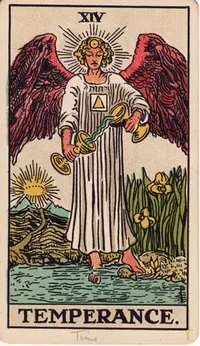
8 “Justice” · 22 “The Fool” · 14 “Temperance”
The 8-22-14 program, Scarcity Anxiety, is a scenario where the energies of Justice, The Fool, and Temperance form a story about the fear of not having enough. In its negative form, you live with the sense that everything is scarce — money, attention, time, warmth. That breeds stinginess and an emotional seesaw: a high, then a crash. In its positive form, it's the ability to hold balance between feeling and logic, live in sufficiency, and share generously without a sense of loss. This triad shows up in various positions on the chart. The placement decides which area of life it touches, but the program's core stays the same: scarcity anxiety, with a way out through equilibrium.
Is 8-22-14 in Your Matrix?
The widget calculates the triplets across every place in the matrix from your date of birth and highlights where the program “Scarcity Anxiety” sits.
What the Three Numbers 8-22-14 Mean
Eight sets a strict judge in motion: you're constantly assessing whether you're being treated fairly, and you strive to be fair yourself, but in its negative form this turns into a harsh internal audit. Arcanum twenty-two, The Fool, brings in chaos and childlike spontaneity: it pushes you toward impulsive acts, derails plans, makes you laugh at the wrong moment or, just as easily, drop out of reality entirely. Fourteen, Temperance, tries to blend everything together and find the golden mean, but when it's weak it turns into a seesaw: strict with yourself today, throwing it all out tomorrow. Together they create a story: a person torn between control and chaos, between 'should' and 'want,' and loses resources in that back-and-forth. Money goes to impulsive purchases, relationships suffer from mood swings, and self-esteem rises and falls with your mood. The core conflict is between the drive to plan for everything (8) and the inability to hold equilibrium (14) under the constant interference of the Fool's randomness (22).
How “Scarcity Anxiety” Shows Up

At work, this looks like: you're afraid to ask for a raise because it feels like you 'haven't earned it,' yet you get upset when a coworker gets praised more. You perceive money as scarce: even when your income is stable, there's an inner anxiety that it will all collapse tomorrow. That's where the stinginess comes from — you cut corners on small things, then blow up and spend a large sum on impulse. The emotional seesaw shows up in relationships: one moment you're fully open with your partner, the next you shut down and go cold, afraid of being used. In daily life, it shows in the small stuff: you cancel plans at the last minute because 'you're not in the mood,' or, the opposite, agree to everything so as not to look stingy. With family, you feel you should be fair to your parents, but inside there's simmering resentment over what they didn't give you as a child. The body reacts with tension: tightness in the neck, the stomach, a sense you constantly have to stay on guard. In its positive form, this same energy gives you the ability to see balance: you calmly assess your resources, share when it's appropriate, and say no when you need to. You don't grip control, but you also don't let things run wild. Financial literacy becomes a tool instead of a source of anxiety.
Program 8-22-14 in 12 places in the matrix
The triad's core stays the same — scarcity anxiety — but it sounds different in each channel on the chart. In the Karmic Tail, it's a recurring scenario from the past: you're dragging along old baggage of distrust and fear. In the Money Channel, the program hits your income: either you earn but can't hold onto it, or you're afraid of large sums. In the ancestral lines, it shows up as an inherited pattern of stinginess or emotional instability, passed down generation to generation. The triad's placement decides the area where you'll notice the seesaw and how loud it gets. Below is the breakdown for each placement on the chart. Pay attention to which area resonates most strongly — that's where the program is most active.
As a child, it may have felt like your parents doled out love in rations — hence the fear that there won't be enough attention or care. You risk passing the same anxiety on to your own children: 'earn it, then you'll get it.'
Learn to give unconditional warmth, without tying it to achievements.
Your gift is sensing imbalance and seeing exactly where a system is breaking down. You're an excellent risk analyst and problem-spotter.
Put this ability to work with resources or finance.
A typical scenario: you have the money, but you still live in cost-cutting mode, afraid of losing it. Income can swing unpredictably, like an emotional seesaw.
Set up regular tracking and a plan — it lowers the anxiety and evens out the flow.
A recurring lesson — scarcity mindset: it feels like there's never enough of anything (money, love, time). This habit is carried over from a past experience of loss or limitation.
Log 3 facts of abundance every day — this reprograms your focus.
The balance between money and love suffers from the same belief: everything must be split evenly and measured exactly. You're afraid that investing in your family will drop your income, and vice versa.
Try an 'abundance' experiment: for one week, stop counting — just give and receive.
In a relationship, you're afraid your partner will leave or fall out of love, so you either control them or pull away first. Love feels like a resource that can run out.
Say your fears out loud — an honest conversation removes the illusion of scarcity.
Your gut works through a sense of 'lack' — you can read what's missing for someone. But you risk confusing anxiety with intuition and choosing out of fear.
Check your gut feeling against the facts: 'is this a real threat, or my old anxiety?'
The paternal line carries anxiety over spiritual values — a fear of loss.
Build your footing on inner sufficiency, not on outside validation.
From the father comes a pattern of scarcity thinking around money.
Learn to see abundance in the material world through systematic planning.
The maternal line passed down an emotional seesaw — swinging from elation to panic.
Stabilize your feelings through logic and gratitude rituals.
The female line locked in a belief of 'there's not enough' around daily life and care.
Introduce a practice of noting sufficiency and setting boundaries.
This period teaches you to live in sufficiency — as you let go of scarcity anxiety, you find balance between feeling and logic, and abundance arrives on its own.
Build the skill of sharing and receiving. Bet on harmony between your emotions and clear plans.
How to Work Through Program 8-22-14

The first step is a financial inventory. For a month, write down every expense — not to scold yourself, but to actually see where the money goes. Next to each amount, write the emotion you felt in the moment of spending: fear, joy, boredom, resentment. After a month you'll spot the pattern: which feelings trigger the money drain. That knowledge is already half the way out.
The second step is a 'sufficiency' practice. Once a week, pick a situation where you usually go stingy (not giving your partner the last piece, not buying yourself something you need), and consciously do the opposite — within reason: share it, buy it, allow yourself. Track what happens with the anxiety: it spikes at first, but if you don't give in to it, it fades. This trains the balance between 'take' and 'give.'
The third step is a regular check-in: every day, answer the question 'what do I feel is missing right now?' and look for whether it's real or just fear. A sign the energy is shifting positive: you say 'no' calmly without guilt, and say 'yes' without fear of loss. You stop keeping score of who put more into the relationship, and start living from a sense of sufficiency instead of need.
Program 8-22-14 at Its Worst and Its Best
The same energy sounds different depending on whether the program has been worked through.
| Area | − Unworked | + Worked Through |
|---|---|---|
| Money | You save for a rainy day, but emotional spending far outstrips your savings, and the cycle closes in on itself. | You can plan a budget without going overboard, and allow yourself to spend without guilt, within what you planned. |
| Relationships | You alternately pull your partner close and push them away, afraid you'll be used or that you'll become dependent. | You speak honestly about your needs and accept care without suspicion, building an equal relationship. |
| Self-Esteem | You measure yourself through other people's praise, but even that doesn't remove the sense that you're not good enough. | You rely on your own standards, acknowledge your achievements, and take criticism calmly. |
| Work and People | You take on more than you can handle to look valuable, then burn out and feel resentful about the unfairness of it. | You clearly assess your capacity, communicate your limits, and delegate when needed, while staying productive. |
| Family and Ancestry | You feel that people close to you shortchanged you, and you keep returning to that thought without ever letting go of the resentment. | You accept that everyone gives what they can, and build an honest dialogue with family without reproach. |
| Body and Resource | You ignore fatigue until you collapse, then recover slowly and painfully. | You notice your body's signals in time, alternate exertion with rest, and feel a stable reserve of energy. |
8-22-14 in Compatibility

In a couple's combined chart, this triad in one partner creates tension: the other may not understand why the person they love keeps swinging from close to distant, from frugal to spendthrift. If both partners have the program, the seesaw doubles — conflicts flare up out of nowhere. It matters that partners talk through their fears instead of acting on impulse. Compatibility is read across both charts: if one partner runs the positive version and the other the negative, there's a chance to balance each other out. The Compatibility Calculator on the site can help you see exactly how your energies intersect.
A full calculation shows all 32 positions of the matrix and highlights whether triplet 8-22-14 is personally yours, and in which of the 12 places — and what to do about it.
Calculate My Matrix →Frequently Asked Questions

How 8-22-14 Differs From Similar Programs
Three combinations most often confused with this program, and the tell that shows which one is actually yours.
Programs Sharing Energies

Roman Mullet
I approach numerology as a symbolic system, not a predictive practice. The program “Scarcity Anxiety” describes a recurring scenario, not a sentence: triplet 8-22-14 has a positive side that opens up once it's worked through.
The texts for each place in the matrix on this page are the same ones the calculator shows in the paid report — one shared nomenclature, nothing tailored just for this page.
About the Author