
Program 13-20-7 “Paralysis of Motion”
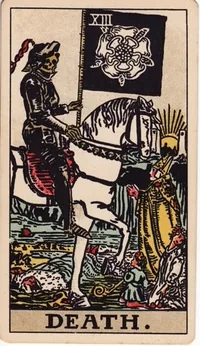
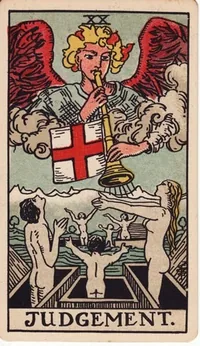
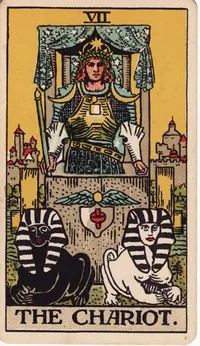
13 “Death” · 20 “Judgement” · 7 “The Chariot”
In the Destiny Matrix, the 13-20-7 program is called Paralysis of Motion. At first glance, it's a scenario where energy freezes in place: Arcanum 13, Death, brings a fear of change; Arcanum 20, Judgement, keeps you looking back over your shoulder at the past; and 7, the Chariot, calls you forward, but without any movement. In its negative form, a person cancels plans, is afraid to take steps, and waits for things to resolve on their own. In its positive form, the same combination gives you the ability to move toward what scares you, trust your intuition, and reexamine your beliefs. These three energies can sit in different places on the chart — the Karmic Tail, the money channel, the ancestral lines. The placement decides where it shows up, but the program's core stays the same.
Is 13-20-7 in Your Matrix?
The widget calculates the triplets across every place in the matrix from your date of birth and highlights where the program “Paralysis of Motion” sits.
What the Three Numbers 13-20-7 Mean
The three arcana form a single plot. Arcanum 13, Death, isn't physical death — it's the closing of a chapter. When it appears in this program, a person perceives every ending as a catastrophe: being let go, a breakup, moving house. Arcanum 20, Judgement, adds the sense of being watched and evaluated. The person is afraid of making a mistake and feels guilty about past decisions. 7, the Chariot, is willpower and motion. In its negative form, it turns into a wish to move without permission to actually start. Together the energies create an inner conflict: body and mind are straining forward, while fear and shame pull back. The person stands still, replaying scenarios in their head instead of acting. The intuition that Arcanum 20 offers gets drowned out by anxiety. The Chariot gets no one at the reins, and the energy gets stuck in 'paralysis.'
How “Paralysis of Motion” Shows Up

At work and with money, this program shows up as sabotage right at the finish line. You prepare for a long time, but right before sending the resume or signing the contract, you find a reason to put it off. For example, a person dreams for years of starting their own business, but every time 'accidentally' picks projects with no room to grow. In its negative form, this looks like constantly switching activities without ever getting results: courses, books, plans — but no movement. In its positive form, the person starts acting even when it's scary. They understand that finishing one chapter opens the next. In relationships, the program brings a fear of closeness. The person is afraid their partner will 'leave' or 'betray' them, so they keep their distance. They might cancel plans, avoid talking about feelings, wait for the perfect moment. In its positive form, there's the ability to talk about the fears, revisit old grievances, and build trust through concrete steps. The program also affects self-esteem. The person is convinced that 'movement equals death,' so any change registers as a threat. They cling to the familiar, even when it causes pain. In its positive form, there's a readiness to change beliefs — for example, to stop assuming change is always dangerous and start seeing opportunity in it instead.
Program 13-20-7 in 12 places in the matrix
The 13-20-7 triad doesn't only show up in the Karmic Tail. There are twelve positions on the chart where it can sit, and it shows up differently in each. The core is the same: a fear of movement and the need to trust intuition. But the sphere depends on the placement. If the program is in the Karmic Tail, it's a recurring scenario from the past, carried from one lifetime into the next. In the Money Channel, it blocks income and growth in earnings. In the ancestral lines, it's passed down as an inherited scenario, in a family where fearing change is the norm. The breakdown below shows how this program sounds in each placement. Note: the placement decides the 'volume' and the sphere, but the core work — moving through fear — stays the same.
As a child, you were frightened of change and taught that 'sit still and you'll stay safe.' Now you're afraid to change the roles within your own family.
Start with a small move within the family — change one habit, and the fear will back off.
Your talent is leading people through change, but you yourself are afraid to take the first step. The potential is locked up in fear.
Become a mentor for others who are also afraid — leading them will stir you into motion too.
The fear that 'movement equals losing money' paralyzes your financial decisions. You keep your money sitting idle, afraid to invest.
Move in small steps: open a savings account, buy an asset — show your money that movement is safe.
You've carried a belief from the past that any movement is dangerous. This pattern has frozen your growth.
Consciously do the thing that scares you — movement cures the paralysis.
A crisis hits when both money and love freeze up. You're not moving in either area, afraid of losing control.
Make yourself take one step in each area — balance comes back through action.
In a relationship, you freeze up at the first sign of trouble, afraid a step forward will lead to a breakup. You prefer a stable coldness.
One step toward your partner — and the fear turns into relief.
Your intuition pushes you to act, but fear paralyzes you — you hear the signal but don't move. Your gut goes quiet.
Take at least one intuitive action a day, even a tiny one.
Your father instilled a fear of movement in spiritual searching and growth.
Consciously step into the new, trusting your intuition.
On the paternal line — paralysis in the face of career and financial change.
Take micro-steps in your finances, reexamining your beliefs.
Your mother passed down a fear of inner change and growth.
Give yourself permission to change, letting go of control.
On the mother's side — a refusal to move in household and daily matters.
Introduce a ritual: one change at home every month.
The main task of this period is overcoming paralysis of motion, by believing that growth is life itself. Every step forward eases the fear and opens new horizons.
Act consciously, but without stopping. Trust your intuition and reexamine the beliefs that hold you back.
How to Work Through Program 13-20-7
First step: start tracking the moments when you put off action out of fear. Keep a journal and write down situations: 'I wanted to call, but put it off,' 'I was afraid to start the project.' After a week you'll see the pattern. Second: pick one small move you've been putting off, and do it within 24 hours. It could be a conversation with someone close about your feelings, or submitting an application. The key is acting while the fear is still there. Third step: reexamine the belief that 'movement equals death.' Find a specific case where a change led to something better. Write it down as proof that movement is safe. A sign the energy is shifting positive: you start acting faster, even when there's doubt inside. You notice that fear is a signal, not a stop sign. The Chariot goes wherever you decide, and Judgement helps you choose the direction.
Program 13-20-7 at Its Worst and Its Best
The same energy sounds different depending on whether the program has been worked through.
| Area | − Unworked | + Worked Through |
|---|---|---|
| Money and Career | You put off promotions, new projects, and even changing jobs, because you're afraid you won't succeed and things will get worse than they are now. | You consciously step into new opportunities, even without certainty about the outcome, and learn from mistakes without stalling at the start. |
| Partner Relationships | You avoid deep conversations and closeness, believing love will bring the pain of change, and keep your distance to protect yourself. | You openly talk about your fears and doubts, letting your partner support you, and build closeness on trust rather than control. |
| Self-Esteem | You believe you're incapable of change, beat yourself up over past mistakes, and avoid new beginnings, as if 'the verdict' has already been handed down. | You accept your mistakes as lessons, trust your intuition, and know you're capable of changing and growing at any age. |
| Working with People | You take on responsibility but don't see things through, afraid the result won't be liked, and hand the initiative off to others. | You confidently lead people, listen to your intuition, and make decisions even when they require courage and risk. |
| Family and Ancestry | You repeat the family script of 'don't stick your neck out,' watching how your parents avoided change and sacrificed their dreams for stability. | You consciously break old family patterns, choosing your own growth and showing by example that movement is life. |
| Body and Resource | You feel constant fatigue and tension, because you hold the fear in your body, restrict your own movement, and don't let yourself rest. | You feel a surge of energy, because you've allowed yourself to move at the body's own pace, trust its signals, and alternate activity with rest. |
13-20-7 in Compatibility

In a couple's combined chart, the 13-20-7 program can show up in different ways. If one partner has this triad, they may be afraid to move forward on shared plans. For example, they avoid talking about the future because they dread change. In a couple, this creates tension: the other partner wants to move forward while the first one holds them back. If both partners have the program, mutual fear can set in, and the relationship freezes at one level. To understand exactly how this energy affects your union, check the Compatibility Calculator. It shows where your channels overlap and which scenarios get reinforced. Overall, the key to harmony is support and an open conversation about your fears, so the Chariot moves forward instead of standing still.
A full calculation shows all 32 positions of the matrix and highlights whether triplet 13-20-7 is personally yours, and in which of the 12 places — and what to do about it.
Calculate My Matrix →Frequently Asked Questions

How 13-20-7 Differs From Similar Programs
Three combinations most often confused with this program, and the tell that shows which one is actually yours.
Programs Sharing Energies

Roman Mullet
I approach numerology as a symbolic system, not a predictive practice. The program “Paralysis of Motion” describes a recurring scenario, not a sentence: triplet 13-20-7 has a positive side that opens up once it's worked through.
The texts for each place in the matrix on this page are the same ones the calculator shows in the paid report — one shared nomenclature, nothing tailored just for this page.
About the Author